Case Study

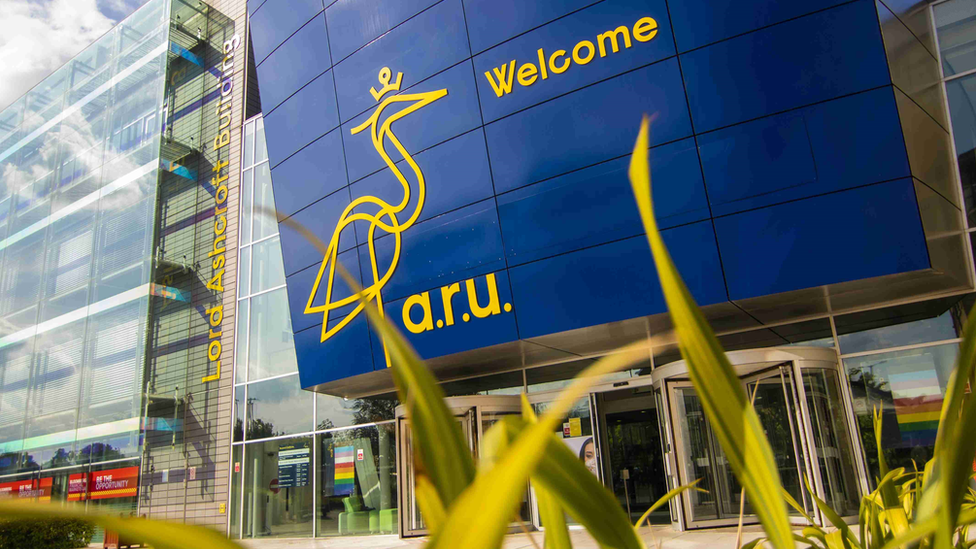
Anglia Ruskin University

Most institutions automate a process. Anglia Ruskin set out to change how the institution runs.
30,620+:: Staff hours saved since go live:: Delivered | 21:: Processes automated across six functions:: Delivered | 27.8:: Full time roles of manual effort addressed:: Modelled | £2.35m:: Three year return:: Modelled
What impressed us most about working with Niico is their deep understanding of the higher education sector. While many companies can build AI agents, understanding the unique characteristics of the HE space is essential. The automation library Niico has built addresses many of the key challenges we face as an institution, enabling us to focus on delivering the best possible student experience.
Anglia Ruskin University

At a glance

Sector:: Higher education | Campuses:: Four | Functions:: Six | Systems replaced:: None | Redundancies:: None

The Challenge

The starting position was not a broken system. It was a large, complex, four campus university with 185 nationalities of students, running on processes that worked but no longer scaled.

Application volumes were rising, international recruitment was growing, compliance requirements were tightening, and the budget for professional services staff was not moving. Adding headcount was not available as an answer.

None of it was work anyone had chosen to do. It was document handling, verification, data transfer, chasing and record updating. The accumulated administrative sediment of an institution that had grown faster than its processes.

Automating one process in one team produces a local saving the rest of the institution never feels. Automating twenty one across six functions, without replacing a single underlying system, requires an operating model, a governance framework, a delivery method that works across very different departmental cultures, and above all a workforce that trusts what is being built.

45,870 hours a year:: Twenty one high volume processes across six functions consumed 45,870 staff hours a year, the equivalent of 27.8 full time roles, at an annual delivery cost of £1.23m. | The largest single process:: Reviewing applicant documents against conditions of entry ran to 40,000 reviews a year at ten minutes each, close to four full time roles, sitting directly on the critical path between offer and enrolment. Every day it ran behind was a day applicants spent not knowing whether they had a place. | Why it mattered:: In a recruitment market where speed to offer determines conversion, slower decisions cost students. In the international pipeline, a delayed CAS is a lost student.

The Outcome

Niico and Anglia Ruskin delivered a phased, institution wide programme rather than a series of point solutions.

Twenty one processes now run automatically across six functions. In UK and EU Admissions, agents handle document management, conditional document review, share code checking, qualification verification and contextual offer making. In the International Office, they handle qualification authenticity checking, application prioritisation, identity and passport verification, English language test verification and offer letter batch processing. In HR, they handle DBS checks, probation, mandatory training, induction, reference chasing, record creation and right to work checks. In Finance, BACS data transfer. In Student and Library Services, extension requests. Across IT, password reset and email forwarding.

Those agents have saved more than 30,620 staff hours since go live, with success rates between 98.79 and 99.97 percent. Handling times fell from 20 minutes to 1 minute on DBS checks, from 12 minutes to 1 minute on extension requests, and from 20 minutes to under a minute on mandatory training. Mandatory training alone has processed 154,385 transactions.

Some of the results changed operational behaviour rather than just cost. Application prioritisation flags all 44,000 pending international applications by academic eligibility, document completeness, refusal history and visa requirement, which means the International Office now works the applications most likely to convert first rather than in the order they arrived. Contextual offer making evaluates every applicant against all seven contextual criteria and generates the personalised offer letter automatically, which means the widening participation commitment is now limited by policy rather than by administrative capacity.

Benefits

Institutional scale, not departmental scale:: Twenty one processes across six functions, delivering a coherent operating change rather than a scatter of isolated efficiencies. | 27.8 full time roles of manual effort addressed:: Without redundancy, releasing capacity into student facing and higher value work. | £2.35m three year return:: On a documented business case, with per process ROI modelled before deployment rather than claimed after it. | Yield, not just cost:: Prioritisation and contextual offer making changed which applicants get attention and how many contextual offers the university can actually make. | Zero system replacement:: Every agent works with the systems ARU already owns, removing the cost, risk and timeline of migration. | Staff confidence in AI shifted from threat to support:: Which is why process twenty one was easier to deliver than process one.

The Numbers

# Delivered | Staff hours saved since go live:: 30,620+ | Processes automated:: 21 across six business functions | Success rate range:: 98.79% to 99.97% | Highest volume process:: 154,385 transactions | # Business case | Annual manual hours addressed:: 45,870 | Equivalent full time roles:: 27.8 | Annual manual delivery cost:: £1.23m | Three year realised return:: £2.35m | Systems replaced:: None | Redundancies:: None
Inside the programme

DBS Checks

Automates DBS check initiation, validation, and tracking - cutting processing time from 20 minutes to 1 minute per record.
Manual DBS administration was slowing onboarding and diverting HR time during peak recruitment periods. Processing each check manually took around 20 minutes per record, creating bottlenecks during busy hiring windows and increasing the risk of delays or errors in compliance-critical checks.
Niico's DBS Automation Agent now initiates checks, validates applicant information, tracks progress, and updates records automatically - with zero disruption to existing systems. The agent reduced average processing time from 20 minutes to just 1 minute per record, while maintaining full audit visibility across the process.
£98.7K
Saved
19,383
Transactions
5,712 hrs
Saved
99.77%
Success Rate
MANUAL PROCESS 20 mins
WITH NIICO 1 min
Faster onboarding of new staff | Reduced administrative burden on HR teams | Improved process consistency and compliance

Extension Requests

Automates student extension request intake and processing - reducing handling time from 12 minutes to 1 minute per request.
Processing student extension requests manually meant delays during peak assessment periods, adding pressure on both students and Student and Library Services staff. Each request took approximately 12 minutes to handle.
Niico's agent now reviews requests against policy, actions approvals, and notifies students automatically - with zero disruption to existing systems. Processing time per request dropped from 12 minutes to just 1 minute, freeing staff time during the highest-pressure periods of the academic calendar.
£11.6K
Saved
11,085
Transactions
2,282 hrs
Saved
98.79%
Success Rate
MANUAL PROCESS 12 mins
WITH NIICO 1 min
Faster turnaround for students during busy periods | Reduced administrative burden on Student and Library Services | Consistent application of extension policy

Mandatory Training

Automates mandatory training assignment, reminders, and record-keeping across departments.
Managing mandatory training manually placed a heavy administrative burden on HR and L&D teams across multiple systems.
Niico's Mandatory Training agents now assign requirements, send personalised reminders, update records, and notify managers automatically.
£135.6K
Saved
154,385
Transactions
13,852 hrs
Saved
99.40%
Success Rate
MANUAL PROCESS 20 mins
WITH NIICO <1 min
Faster onboarding of new staff | Reduced administrative burden on HR teams | Improved process consistency and compliance

Password Reset & Email Forwarding

Automates password reset and email forwarding requests - reducing handling time from 10 minutes to 1 minute per request.
Handling password resets and email forwarding requests manually meant delays for students and staff during high-demand periods.
Niico's agent now verifies requests, actions resets, and updates forwarding settings automatically - with zero disruption to existing systems.
£15.3K
Saved
12,294
Transactions
2,570 hrs
Saved
98.79%
Success Rate
MANUAL PROCESS 10 mins
WITH NIICO 1 min
Faster resolution for students and staff | Reduced repetitive workload on IT and admin teams | Consistent handling of every request

Probation

Automates probation milestone tracking and manager reminders - reducing missed review dates.
Tracking probation milestones manually across HR systems made it easy for review dates and sign-offs to slip during busy periods.
Niico's Probation Agent now monitors key dates, prompts managers for reviews, and updates records automatically.
£41.8K
Saved
3,396
Transactions
1,629 hrs
Saved
99.97%
Success Rate
MANUAL PROCESS 15 mins
WITH NIICO 1 min
Reduced risk of missed review dates | Freed up HR time for higher-value work | Improved consistency across the probation process
Eliminated bottlenecks
across high-volume, time-sensitive processes
Freed up staff time
to focus on higher-value tasks and student support
Prevented the risk
of missed deadlines and delays across busy periods
Boosted awareness and confidence
in AI among staff, shifting perceptions from threat to support

Continue reading

Whitepaper

Admissions 2030

How automated, responsive, conversational, predictive and deeply personalised systems will redefine the way universities attract, assess and convert applicants — and what admissions leaders should do now.
Read article
Read article
Report

The EU AI Act Explained: A Practical Guide for Education Leaders

As AI becomes embedded across education, understanding the regulatory landscape is just as important as understanding the technology itself. This practical whitepaper helps technology, transformation and institutional leaders navigate the EU AI Act, understand its impact on education, and prepare their institution for responsible AI adoption. It is grounded in the latest guidance and designed to help you take practical action with confidence.
Read article
Read article
Guide

AI and Automation in Education Guide

Your 101 guide to AI and automation in education: AI and automation are rapidly reshaping education, creating new opportunities to improve efficiency, enhance the student experience, and reduce administrative burden. This practical guide provides technical leaders with a clear introduction to the core concepts, key technologies, and first steps for successfully adopting AI and automation across their institution.
Read article
Read article