From the live discussion and the audience Q&A, answered by Gunel McLaughlin and Alistair Sergeant. Pick a topic, then click any question to read the answer.
What brought you into the sector, and how did you end up at Hull?
A varied route. Gunel started her career in embassies, then spent around eight years in peacekeeping operations, before moving into education. Fifteen years in UK higher education followed. She arrived at Hull in February 2024 to transform admissions. She describes coming into the function sideways rather than up through it, and treats that as an advantage rather than a gap. You do not inherit the assumptions, so you can ask why something is done a particular way and mean the question.Gunel McLaughlin
What did you most want to change when you arrived?
Almost everything, with one exception. Not the team. The team had real depth of knowledge and skill. What needed to change was the environment around them: the ways of working, the technology, and the appetite for innovation. The university had put innovation and change at the centre of its strategy, and Gunel was brought in to make admissions a sustainable, high quality operation that supported those wider goals.Gunel McLaughlin
What did the team look like when you arrived, and what is different now?
The team was split into specialist groups, with people working separately on undergraduate, postgraduate and research applications, in ways that had been in place for years. Now any member of the team can handle any application or any enquiry. Gunel calls it a united front on admissions. The team also became data driven, with dashboards that surface the risks and the opportunities day to day as well as across the cycle.Gunel McLaughlin
What have you changed beyond technology?
Structure and skills, at the same time as the technology. The team was restructured, expertise was repositioned, and colleagues were trained in work they had not done before. All of it happened while the cycle carried on and business as usual continued. Gunel is straightforward about it: doing everything at once was ambitious and challenging, and looking at the results it was the right call.Gunel McLaughlin
How did you identify the issues, and what created the time and cost savings?
It started with questions rather than technology. Gunel asked why a process existed at all rather than assuming it had to. That surfaced work being done out of habit, plus undocumented exceptions that only existed in one person's memory. Broken processes were fixed before anything was automated, because automating a poor process only makes the poor process faster. Then they put a number on it, hour by hour, which is what turned a good idea into a business case. Only then did the technology go in, end to end rather than one step at a time.Gunel McLaughlin & Alistair Sergeant
Was the starting point volume, speed, consistency or applicant experience?
All of them, because they are not separate problems. Volume creates a speed problem. Speed creates a consistency problem. Inconsistency creates an experience and fairness problem for applicants. And all of that ends with the university lacking confidence in how effective its admissions operation is, despite the hard work going in. There was a second driver alongside it. Freeing the team's time for the work that adds value, so people could build skills in applicant conversations and complex cases rather than in repetition.Gunel McLaughlin
How did you know the answer was not more people or another core system?
Two reasons. Adding people was not on the table. Applications kept going up and the team did not, so the operation had to handle more without more budget. On systems, Gunel's view is that you cannot ask a team to work differently while handing them the same systems and the same tools. Putting another system on top of the ones already running carries its own risk, because an upgrade can throw the whole thing out. The approach chosen instead was to layer automation onto what was already there, with no integration and nothing replaced.Gunel McLaughlin
How do you tell a process that should be automated from one that needs redesigning first?
Look for the exceptions. If a process runs on undocumented rules that exist only in somebody's memory, or on steps done a certain way because they have always been done that way, it needs redesigning first. Hull worked through all of that before any automation went near it. The test is whether the specification is clean enough to hand over. That said, this is not a case of getting the process perfect and then stopping. Automation is very good at showing you where a process still needs work, and it gives you a level of insight into how the work actually runs that you did not have before. Hull treats it as continuous rather than a one off fix. The offer making strategy changed this year and the rules moved with it.Gunel McLaughlin & Alistair Sergeant
How can AI do the initial assessments?
If the question is how you assess where AI could help you, that is the guide we promised on the call, linked below under Build your own business case. It follows the same process we ran with Gunel and the team: understand the processes, pick the use cases, get the metrics behind them. If the question is how AI does the initial assessment of an application, it works on your rules rather than on judgement. The bot opens the application, checks the qualifications, the predicted grades, the fee status and the contextual metrics, proposes a decision and shows its reasoning. A person confirms it. It is doing the assessment. It is not setting the policy.Alistair Sergeant
How do you make sure adoption happens at the right time, and that you get real value from it?
Adoption sticks when the process underneath is ready and when somebody owns it after go live. On readiness, do the process work first. Standardise, remove the exceptions, get the specification right. On timing, work backwards from your cycle. Hull took about six months to reach testing and another three to test, and timed it so the impact landed at the start of the year. On ownership, Hull created a permanent post, an admissions innovation and technology manager. Without somebody whose job is to keep looking, automation becomes a project that finishes rather than a way of working.Gunel McLaughlin & Alistair Sergeant
What resource and time did the implementation take?
About six months to reach the point of testing, then another three months of testing. Timing it against the admissions cycle matters, because the impact needs to land at the start of the academic year. On resource, Hull created one dedicated post, an admissions innovation and technology manager. It is permanent rather than a project role, so looking for the next opportunity is part of the day job.Gunel McLaughlin
Was there a reduction in staff as a result of this implementation?
The purpose was never headcount. It was capacity. Applications at Hull were going up and the team was not, so the question was how to get through more without cutting corners and without more budget. What changed was the shape of the work rather than the size of the team. The silos between undergraduate, postgraduate and research went. People were retrained and expertise was repositioned. The team now spends its time on complex cases, on conversion and on talking to applicants instead of on routine checks.Gunel McLaughlin & Alistair Sergeant
Can these enhancements still achieve value for money for much smaller institutions with lower volumes?
Yes. The return depends on scale, but it does not need Hull's volumes to work. Schools and colleges with a few hundred students are using the same approach.Alistair Sergeant
Are the bots making application and fee assessments on rules, on AI, or both?
Rules. That puts the weight on the specification. Standardise the process and remove exceptions as far as you can before you automate anything. The bots handle most of the variation in applications and flag the cases that need a person, and they do that because the underlying process was tidied up first. Automation should not be used to mask a process that is already broken.Gunel McLaughlin
How and when do you approach fee status assessments?
The bot opens the application and works through it the way a member of staff would. Qualifications, predicted grades, fee status and contextual metrics are assessed together as one package rather than as separate steps. Fee status is not a standalone automation at Hull. It falls out of an end to end review of the application.Gunel McLaughlin
Can the bots read information from document uploads such as transcripts?
They can read the documents. An agent can open a transcript, pull the qualification detail out of it, run the calculation, and check that the right document was uploaded in the first place, which is often where the time actually goes.Alistair Sergeant
We spend hours chasing flight details, letters of undertaking for guardians, settled status and proof of address. Can all of that be automated?
Yes. If a person is doing it on your systems today, an agent can do it, faster and without the transcription errors. Agents also work overnight, so the queue is shorter when the team logs on in the morning.Alistair Sergeant & Gunel McLaughlin
You mentioned removing the peaks. How did that work in practice, for example at confirmation?
Results come from UCAS on the Friday. The bot works through the output that night and into the Saturday, so by Saturday morning roughly 60 percent of decisions are already firmed. It runs smoothly on the day because of the preparation behind it. The specification and the spreadsheet have to be right, and the support runs late into the Friday. What the team gets back is a Saturday spent on the cases that genuinely need them.Gunel McLaughlin
Does the use of the bot comply with GDPR, given staff are still checking the decisions?
Staff check every decision. One bot assesses the applications and produces a spreadsheet, for example 200 applicants, with the proposed decision and the reasoning behind it: three A levels, three predicted Bs, conditional offer, contextual flag. The team reviews at around a minute per applicant without going back into the system, confirms, and a second bot processes the output. Hull's GDPR specialists cleared the approach and nothing was raised as a major risk.Gunel McLaughlin
What was the biggest area of push back, and where were the easiest wins?
The push back is rarely about the technology. It is about not knowing what it will actually do. At Hull the nervousness sat with IT to begin with, which is fair enough, because nobody had run an agent on those systems before. What settled it was showing them. Sessions were run where IT sat and watched the bot log in and work through an application. Once people can see it doing what a member of staff does, the conversation changes. The easiest win is usually the process everybody already complains about. High volume, rules driven, repetitive, and nobody is defending it.Alistair Sergeant
If there was resistance from staff or stakeholders, how did you convince them?
Three things did it at Hull. Openness, demonstration and constraint. Openness first: Gunel took it to the executive early and was straight about what she wanted to do and why. Demonstration second: sessions where IT and the team watched the bot log in, open an application, run the checks and produce the output. What people assume AI is doing is usually worse than the reality, and watching it removes the assumption. Constraint third: access is restricted to the parts of the system the bot needs, nothing is integrated, nothing is replaced, and every decision is checked by a person before it goes anywhere.Gunel McLaughlin & Alistair Sergeant
What was the most unexpected part of this transformation?
For Hull, nothing on the technical side. What surprised Gunel was the relationship between the team and the bots. The team named them. Ant and Dec review the applications, Connie handles clearing and confirmation, and they get referred to by name in the daily stand ups. For Niico, the surprise was how far Hull was willing to push the scope. Most institutions ask us to automate a step. Gunel asked us to automate the whole of offer making, from the application arriving to the letter going out.Gunel McLaughlin & Alistair Sergeant
What is the team doing instead now?
Work that needs a person. Complex cases, conversion, contextual applicant engagement and enquiry management. Gunel's ambition was to take the repetitive, straightforward tasks away so the team could develop skills in the areas that actually affect applicants. Her picture for 2030 goes further: processes designed around the applicant, with a personalised experience from the first touch point. Personalisation gets discussed everywhere and delivered rarely, because nobody has the time for it. Technology is what creates the time.Gunel McLaughlin
What is the biggest lesson from doing this twice?
Think big, and trust that the technology can support an ambitious plan. Most people put a ceiling on what it can do, and that ceiling sits lower than reality. Given the chance to start again, Gunel would have brought a lot more into scope from the outset. Hull is now into a second phase, expanding the scope to more applicants and more programmes.Gunel McLaughlin
To what extent does an admissions officer influence the decision making process in university recruitment?
More than most institutions realise, and less than it should be. Admissions is usually the first real conversation an applicant has with a university. Speed and consistency at that point decide whether an offer gets accepted or sits while somebody else answers first. International postgraduates in particular are holding several offers and working backwards from a visa appointment. The problem is where that influence goes today. It goes into moving applications through a queue rather than into the applicant. Take the routine work away and the same people are free to spend their time on conversion, on complex cases and on the applicants who need a conversation.Alistair Sergeant
What would be straightforward entry requirements for mature students returning after a ten year gap?
This one sits with the institution rather than with us. Entry requirements are a policy decision and they vary by course. What we can speak to is how automation treats applicants who do not fit the standard profile. Non standard routes tend to get the slowest treatment, because they need judgement and they sit in a queue behind the straightforward cases. If the rules take care of the straightforward applications, the mature applicant with a ten year gap reaches a person sooner rather than later. Hull's bots flag exactly those cases for the team rather than trying to decide them.Alistair Sergeant


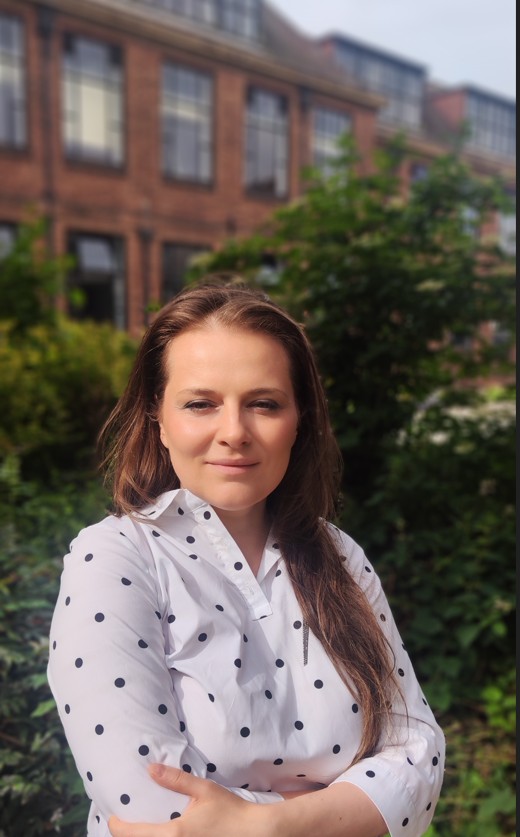 Gunel McLaughlinDirector of Admissions
 Alistair SergeantFounder & CEO